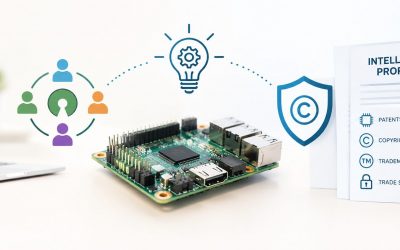
IP in “Internet of Bodies” (IoB): Wearable and Implantable Devices and Ownership of Health-Related Data

Introduction : Through the rapid technological integration of digital technology with the human body, the IoB is a technology ecosystem in which devices are worn on, implanted in, or digested through the human body to capture, process, and transmit physical/physiological information. From fitness wearables and smartwatches to pacemakers, neural chips, and smart pills, the internet of the human body is transforming the medical landscape by enabling real-time body monitoring, targeted treatment, and predictive medicine. However, this synergy of the biological world of the human body, software technology, and data analysis tools gives rise to various complicated issues in the realm of intellectual property laws. This particular blog post would enumerate the major intellectual property challenges presented by the advent of the Internet of the Human Body technology.
Exploring the Internet of Bodies Ecosystem
Internet of Bodies is the convergence of medical devices, software components, and data-driven technology. For example, wearables such as smartwatches and fitness trackers track various data points about the body. Implantable devices, such as pacemakers and insulin pumps, are used to regulate and track the body’s functions. Ingestible devices are, such as sensor-packed pills that monitor data in the body and relay it outside for further medical analysis. What characterises IoB from IoT devices is that such devices are inextricably tied to or embedded in or within the human body, rendering the data generated by them highly personal and sensitive in nature. That being said, the applicability of IP rights in such technologies is complicated by the fact that it often combines natural and technological processes.
Patentability Issues in IoB Technologies
Among the key IP issues that emerge in the IoB sector is the patenting of bio-digital inventions. This is largely because the IoB sector employs the use of software algorithms, diagnostic processes, as well as data processing techniques that feature the analysis of the bodily functions of a user. In a number of jurisdictions, the patenting of abstract ideas, computer programs per se, and diagnostic or treatment processes is not patentable unless a clear technical innovation is apparent. This state of affairs creates IP uncertainty for inventors who wish to patent inventions that relate to the IoB sector, especially where the innovation lies not within the hardware but within the interpretation of the generated data. An illustrative example of such an invention would be an algorithm that evaluates heart rate variability to establish cardiac risk, which would amount to an abstract innovation unless it were intricately linked to a specific innovative technical embodiment.
Patent Thickets and Innovation Barriers
IoB devices often comprise several patented elements, ranging from sensors to wireless communication mechanisms, processing systems, as well as artificial intelligence models. This often gives rise to issues of patent thickets, where multiple patentees possess overlapping patents. In this regard, dealing with patent thickets involves massive licensing, resulting in high costs, thereby acting as a barrier among start-ups as well as other health innovators. In the health sector, such challenges might result in limited distribution of vital technologies. Moreover, as a result of such distribution, health issues may not be appropriately addressed by the current framework of patent law in the age of IoB.
Health Care Information Ownership vs. the Boundaries of Intellectual Property Rights
One of the core concerns in the Internet of Bodies paradigm regards the ownership of the data derived from the human body. Although traditional intellectual property law does not regard data primarily because of its lack of originality, IoB firms nevertheless claim ownership of processed data, aggregated analyses, and AI-based findings. This ownership, in turn, can be protected in terms of trade secrets, databases, and legal agreements, without requiring official IP registration. The users, in this case, primarily the human body, are, in fact, deprived of all control related to their health information, which in turn raises significant inconsistencies in terms of autonomy versus ownership of such personal data.
Specific Contracts May Operate as Contracts of Adhesion
Most of the IoB devices apply the standard contract, where the collection and usage of data are agreed upon by the user in lieu of accessing the particular service. Such contracts often stipulate that companies use the data as they may deem fit and that users are allowed only access to their data and no further. From an IP law perspective, such contracts are what shield companies from data ownership since they can control such data as if it were their own. There is concern about user data consent and whether it is in their best interest that such data can be treated as an individual’s personal property.
Trade Secrets and Algorithmic Opacity
Besides patents, IoB companies rely heavily on trade secret protection for proprietary algorithms and data-processing techniques. This avoids the disclosure under patent law but results in a lack of transparency in medical decision-making. Inasmuch as algorithms impact diagnoses or treatment recommendations, secrecy undermines accountability and inhibits independent scrutiny. This tension between proprietary protection and public interest is particularly heightened within this sector, given the requirements of transparency and trust in healthcare. Excessive reliance on trade secrets in IoB technologies thus raises questions on the balance that exists between private incentives with IP doctrines and the needs of society.
Copyright and Interoperability Issues
Copyright can thus play a role in protecting the software, user interfaces, and firmware on which IoB ecosystems are built. At the same time, copyright protection can extend to prevent interoperability and tie consumers to proprietary ecosystems. When IoB devices are designed only to function within closed ecosystems, consumers may be prevented from integrating third-party applications or moving their data into alternative platforms. This can reduce consumer choice and inhibit competition, particularly within healthcare markets that rely heavily on interoperability for effective treatment and continuity of care.
Data Exclusivity and Market Power
Other than IP protection, health data possesses considerable market power, and firms that use IoT and focus on acquiring extensive user data can build better AI algorithms, leading to health data monopolies that cannot be rivalled by any other company. Data exclusivity is not an IP right under conventional definitions, but it has the same impact as IP protection. Data exclusivity and its interaction with IP protection have become an issue concerning IP protection and competition law, especially in relation to restricted innovation and access to cheap healthcare solutions due to health data exclusivity.
The Ethical Dimension of IP in the IoB Environment
The integration of IP law within IoB technologies is fraught with very fundamental ethical issues, especially identified in relation to the commercialisation of the human body. When data produced by human bodies is considered as intellectual property, there is a great chance that human beings might be reduced to data-producing sources, not as rights holders. This is especially true when such data is produced by people belonging to vulnerable sections, such as patients suffering from chronic ailments, who may not have any alternative but to use IoB technology.
Regulatory Gaps and the Need for Integrated Governance
Legal frameworks currently available to address IoB technologies are fragmented: IP law operates independently of data protection law and medical device regulations. Fragmentation inhibits any valid consideration of the unique challenges thrown up by IoB technologies. The alternative models under discussion for a while now by scholars and policy-makers refer to data trusteeship or fiduciary duties, where companies act as custodians rather than as owners of health data. Such approaches might therefore reconcile innovation incentives with user rights by giving weight to the special status of body-linked data.
The Indian Legal Perspective
Various legal frameworks in India interact with IOB technologies like the Patents Act, 1970, with exemptions from patenting regarding software in itself and medical procedures, and then comes the Digital Personal Data Protection Act, 2023, governing personal data processing. Even though public interest safeguards form a part of Indian patent law, it has not ruled on ownership or proprietary claims over health data. With the increasingly widespread adoption of IoB in India, clarity in the interplay of IP rights and data protection with a view to healthcare access assumes crucial importance so that the march of technological progress is not at the cost of individual rights.
Conclusion
The Internet of Bodies marks the beginning of a major paradigm shift from the way humans interact with technology, providing unprecedented potential for enhanced healthcare and living standards. However, it also reveals the inadequacies of current intellectual property laws that lack the necessary tools and expertise to adequately address technologies that interact with and benefit from the human body. The current state of intellectual property laws and the necessary changes to respond to the IP issues that the Internet of Bodies presents would need the redefinition of traditional IP approaches to address the ethical and legal effects of body-related innovation.
Author:- Khilesh Patle, in case of any queries please contact/write back to us at support@ipandlegalfilings.com or IP & Legal Filing.