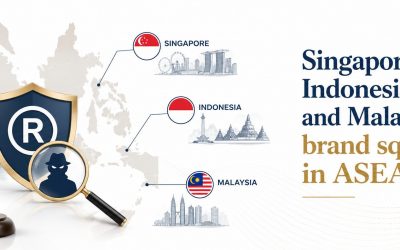
The Silent Race for IP Power in ASEAN : Filing Strategy in Absence of a Common System

Introduction : At first glance, ASEAN TM View looks like the kind of centralized platform a brand owner would expect from a bloc of 680 million consumers. A unified portal with searchable trademark records, a single point of reference for a region that has at least formally declared its pursuit of economic integration for decades. The reality though, is constrained. ASEAN TM View is a search and information tool. You can look up marks, but you cannot file through it, and it confers no trademark rights. Trademark protection in ASEAN remains entirely territorial, which means a brand entering the region must file separate national applications across eleven member states, navigating eleven different trademark offices, eleven examination regimes, and registration timelines that range in practice from 2 months to 3.5 years. This variance is the defining feature of the ASEAN trademark landscape.
The reason no EUIPO equivalent exists boils down to how ASEAN was designed. Unlike the European Union, the organisation was never built around the idea of pooling sovereignty. Rather, it operates on what is known as the ASEAN Way, i.e., consensus-based decision-making, mutual non-interference, and deep respect for each member state’s autonomy. Those principles have enabled extraordinary cooperation across a genuinely diverse group of countries, but they also make a supranational trademark body politically implausible. A regional office with binding authority over national systems would require member states to cede precisely the kind of control the ASEAN Way is structured to protect.
The 1995 ASEAN Framework Agreement on Intellectual Property Cooperation committed member states to studying the feasibility of an ASEAN trademark system and a regional trademark office. Three decades have passed since then, and neither exists till date. Instead, a set of non-binding Common Guidelines for trademark examination has emerged, with individual offices retaining considerable discretion over their application and interpretation. As a result, variance in examination results is not a flaw that has to be fixed. It is a structural feature of the regime itself. The ASEAN Way is not waning, and the design of more recent regional accords still favours voluntary collaboration over binding integration. Fragmentation is not merely a stage in the development of ASEAN trademark law; it is the law itself.
The Madrid Protocol as a Partial Solution
The closest mechanism to a regional filing system that currently exists is the Madrid Protocol, and it is genuinely useful for certain markets. Nine of ASEAN’s eleven member states have acceded; Myanmar has remained outside the system while its domestic IP framework continues to develop, and East Timor, ASEAN’s newest member, has not yet acceded. For both, direct filing with the relevant national office is the only available route, and brand owners with supply chain or commercial exposure in either jurisdiction should plan accordingly.
For the nine Madrid members, the picture is more nuanced than it first appears. The system functions well in Singapore, Vietnam, and the Philippines. In Thailand, however, a significant proportion of international designations receive at least one provisional refusal, often after a wait of sixteen to eighteen months, because Thailand’s Department of Intellectual Property applies an unusually restrictive interpretation of distinctiveness, particularly for service marks in Class-35
covering retail services, business administration, and platform commerce. Terms that pass examination in London or Singapore can attract objections in Bangkok on grounds that they amount to general expressions. Direct national filing, where local counsel can calibrate the specification before submission, typically produces better results.
Indonesia presents a separate difficulty specific to Madrid: the central attack risk. If the basic application underlying an international registration is cancelled within five years, the international registrations that flow from it can be affected. Given the volume of trademark cancellation activity in Indonesia, this is a real operational concern rather than a remote contingency. Cambodia illustrates yet another limitation of treating Madrid as a uniform solution; while international designations are available, examination can still take twelve to eighteen months, and trademark owners must comply with local post-registration requirements including filing a Declaration of Use or Non-Use within prescribed timeframes. Madrid reduces filing complexity without eliminating the need to understand what each ASEAN jurisdiction actually requires.
A Risk Gradient, Not a Uniform Market
The most useful way to approach ASEAN for trademark strategy is as a risk gradient rather than a single market, and Singapore sits clearly at the top of that gradient as the natural anchor for any ASEAN trademark portfolio. The Intellectual Property Office of Singapore is among the most efficient and technically sophisticated offices in the region; examination is reliable, the opposition system is well-established, and Singapore’s Trade Marks Act expressly protects well-known marks that are not locally registered by incorporating Article 6bis of the Paris Convention directly into statute. Singapore’s IP Strategy 2030, which targets the country’s establishment as Asia’s leading IP hub, signals that this institutional standing will be actively reinforced over the coming decade.
Indonesia is the hardest call. It is ASEAN’s largest economy, which means no serious regional brand strategy can exclude it, but its trademark administration has structural problems that require planning around. The examiner-to-application ratio at the Directorate General of Intellectual Property stands at approximately 1 to 150, against WIPO’s recommended benchmark of 1 to 50. Statutory timelines carry no meaningful sanctions for non-compliance. Between 2021 and 2025, Indonesia’s Commercial Courts handled 156,860 trademark disputes, many of them arising from registrations that a functioning examination process should have filtered out. The deeper structural issue is that the Directorate General cannot reject applications on bad faith grounds during examination, meaning that when a squatter files your mark before you do, Commercial Court litigation is typically the primary remedy. Indonesia requires filing before any public announcement of market entry, not after.
Vietnam’s legal framework is broadly sound, but the gap between statutory and actual registration timelines is substantial. The prescribed registration period is nine months; reported average processing times are closer to three and a half years. Enforcement also runs almost entirely through administrative channels, including inspectorates, customs authorities, and market surveillance bodies, with only a small fraction of intellectual property disputes reaching the courts at all. Brand owners accustomed to obtaining injunctive relief through civil litigation will need to recalibrate expectations significantly before entering Vietnam, because the enforcement environment operates on fundamentally different assumptions.
Thailand is comparatively predictable, but the Department of Intellectual Property’s approach to Class 35 service marks has produced well-documented difficulties for brands in retail, technology, and financial services. Specifications that raise no issues elsewhere regularly attract distinctiveness objections in Bangkok, which makes local counsel with current knowledge of examination practice genuinely valuable. Malaysia offers something different from most of the region: its first-to-use framework means that prior commercial use can confer defensive rights, giving brands with established market presence a form of protection that Indonesia and Vietnam’s first-to-file systems simply do not recognise. The Philippines has a mature post-reform trademark regime with a functioning opposition framework; Cambodia is Madrid-accessible but requires continuing attention to post-registration compliance obligations.
Two Risks That Catch Portfolios Off Guard
Bad faith trademark squatting is a recurring feature of the landscape in Indonesia and Vietnam, not an occasional exception to it. Both operate first-to-file systems, and in both jurisdictions the main mechanisms for addressing bad faith arise after registration rather than during examination. INTA’s global surveys on bad faith filings consistently identify Indonesia as a high-risk jurisdiction. Cancellation actions can and do succeed, as the Pierre Cardin and Nike cases before the Indonesian Supreme Court demonstrate, but they require sustained and costly litigation. The deterrent is straightforward: file before announcing market entry.
Non-use cancellation tends to be underestimated even by sophisticated brand owners, and the IKEA dispute illustrates why it should not be. IKEA’s Indonesian trademark registration was cancelled for non-use and the Supreme Court upheld the decision, not because IKEA was careless but because Indonesian law actively enforces its three-year non-use period and the facts were against the company. Registration is the beginning of a compliance obligation, not the end of one, and use calendars must be maintained across each jurisdiction in an ASEAN portfolio as a matter of routine.
Filing Framework
With all of the above in mind, a practical sequencing works as follows. Singapore, Indonesia, Vietnam, and Thailand warrant immediate filing before any public announcement of market entry, given their combination of commercial scale and squatting risk; Madrid is appropriate for Singapore and Vietnam, while direct national filing is generally preferable for Indonesia and Thailand. Malaysia and the Philippines can follow within approximately six months, given their more manageable risk profiles and effective Madrid coverage. Cambodia, Laos, Brunei, Myanmar, and East Timor should be addressed based on actual commercial or supply chain exposure, with Cambodia Madrid-accessible subject to post-registration compliance, and Myanmar and East Timor requiring direct national filings.
RCEP’s Chapter 11 has introduced a baseline of trademark obligations across fifteen member states, including recognition of non-traditional marks and alignment to the Nice Classification. It does not create harmonised examination standards or mutual recognition of registrations, and trademark protection remains fundamentally national. Singapore’s IP Strategy 2030 is the more concrete near-term development, backed by institutional investment rather than aspirational language, reinforcing Singapore’s position not merely as a filing destination but as the region’s intellectual property hub of choice.
Conclusion
The ASEAN trademark strategy is not complicated in principle. It requires early filing, jurisdiction-calibrated approaches for Thailand and Indonesia, genuine commercial use maintained across the portfolio, and realistic expectations about enforcement in Vietnam. The complexity arises not from any individual rule but from the fact that eleven distinct sets of rules apply simultaneously, with no common mechanism to reconcile them. The brands that navigate this successfully are invariably the ones who understood that before they entered the market.
Author:-Navya Dwivedi, in case of any queries please contact/write back to us at support@ipandlegalfilings.com or IP & Legal Filing.
Endnotes
- ASEAN Framework Agreement on Intellectual Property Cooperation art. 4, Dec. 15, 1995, https://agreement.asean.org/media/download/20161129035137.pdf.
- Protocol Relating to the Madrid Agreement Concerning the International Registration of Marks, June 27, 1989, 828 U.N.T.S. 389; World Intellectual Property Organization, Madrid System: Members, https://www.wipo.int/madrid/en/members/ (last visited July 2, 2026).
- Association of Southeast Asian Nations, ASEAN TMview, https://www.asean-tmview.org/tmview/ (last visited July 2, 2026).
- Regional Comprehensive Economic Partnership, ch. 11 (Intellectual Property), Nov. 15, 2020, https://rcepsec.org/legal-text/
- Intellectual Property Office of Singapore, Singapore IP Strategy 2030, https://www.ipos.gov.sg/about-ipos/ipos-strategy-2030 (last visited July 2, 2026).
- International Trademark Association, Addressing Bad Faith Trademark Filings Around the World (2024), https://www.inta.org/resources/addressing-bad-faith-trademark-filings-around-the-world/