Personality Rights and Copyright Law in India: Understanding the Overlap and Legal Challenges

Introduction
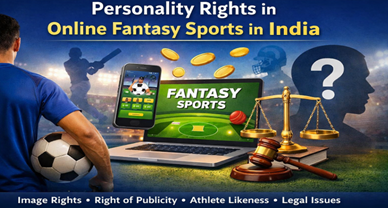
In our contemporary society, an individual’s identity has now become a valuable commercial asset. Famous personalities, celebrities, and public figures often find their names, photographs, voices, or some of their attributes being used for commercial advertisements and in the online content without their consent. This has given rise to an increased focus on personality rights, which protect individuals from unauthorized commercial exploitation of their identity.
Many such disputes also involve copyright law, particularly where photographs, videos, sound recordings, or performances are concerned. This overlap creates complex legal questions regarding ownership and control. While copyright law protects creative works, personality rights protect the identity of the individual featured in those works and provide a safeguard against the misuse and commercial exploitation.
Historical Background and Evolution of Personality Rights in India
The term “Personality Rights” is of recent origin in India, the concept has evolved gradually through judicial interpretation. Initially, the Indian courts focused on protecting individuals from intrusion into their private lives by recognizing the right to privacy under Article 21 of the Constitution. Over the time, with the growth of media, commercial advertisements, and celebrity culture, courts acknowledged that an individual’s identity also carries commercial value. This resulted in the recognition of personality and publicity rights, particularly in the cases that involve misuse or unauthorized commercial exploitation. There is a lack of specific legislation for the personality rights; the courts have relied on constitutional principles as well as common law remedies such as passing off to prevent misrepresentation and unfair commercial gain. As a result, the evolution of personality rights in India has largely driven by the interpretation of courts, with recent decisions also adapting these principles to address digital and technological challenges.
Personality Rights and Copyright in India
Personality Rights are the rights that form under the subset of Intellectual Property Rights. This right provides a safeguard against the misuse and exploitation of commercial interests and moral interests of the individual. These rights are particularly used by the famous personalities and celebrities like actors, politicians, sportsperson, and public figures to protect and prevent the misuse of their attributes like name, voice, likeness, signature, photographs, and their distinctive character from the unauthorized commercial exploitation. In a nutshell, these rights allow individuals to control how their identity is used commercially. In India there is no any law that specifically define “Personality Rights,” but the Indian courts have recognized and enforced them progressively through judicial interpretation and precedent.
Copyright is an Intellectual Property Right that provides a legal framework to protect creative expressions; it protects the original work of a creator once they are expressed in a tangible form. Copyright law in India is governed and regulated by the Copyright Act, 1957. The law protects original literary, artistic, musical, and dramatic works, cinematography films, and sound recordings. Copyright gives creators an exclusive right to reproduce, distribute, and communicate their works to the public.
Unlike the personality rights, the copyright law protects the expression of an idea not the identity of the individual featured in the work. For example, usually a photographer owns the copyright in a photograph, even if a celebrity appears in it, here the distinction becomes important when such copyrighted works are used for commercial purposes without the individual’s consent.
Judicial Approach: Key Indian Case Laws on Personality Rights
In the absence of specific legislation, the Indian courts have played a crucial role in recognizing and protecting personality rights. An important early decision addressing personality rights is ICC Development (International) Ltd. v. Arvee Enterprises[1] (2003), the Delhi High Court examined whether an organization could claim personality or publicity rights in relation to a sporting event. The plaintiff alleged that the defendants had falsely claimed an association with the Cricket World Cup. The Court rejected the claim based on personality or publicity rights, holding that such rights emerge from the right to privacy and are available only to natural persons. In this judgement, it was clarified by the court that non-living entities, corporations, or event organizers cannot claim personality rights. This decision established that the right of publicity is personal in nature and cannot be extended to events or institutions.
In DM Entertainment Pvt. Ltd. v. Baby Gift House[2] (2010), the Delhi High Court in this case had dealt with the unauthorized sale of dolls resembling a well-known singer. The court restrained such use and recognized that a celebrity’s persona carries commercial value. It was held that unauthorized commercial exploitation of a person’s identity amounts to misappropriation. It was further observed that such use can mislead the public into believing that the celebrity has endorsed the product, thereby constituting passing off. This case firmly recognized that personality rights protect individuals from unauthorized commercial exploitation, independent of copyright ownership in the product.
Further, in Amitabh Bachchan v. Rajat Negi[3] (2022), the Delhi High Court granted interim protection to the actor’s personality rights by restraining unauthorized use of his name, image, voice, and likeness across multiple platforms. The court acknowledged that misuse in the digital space can cause irreparable harm. Similarly, in Anil Kapoor v. Simply Life India & Ors.[4] (2023), the court recognized the growing threat posed by digital and AI-based misuse and granted interim protection against unauthorized exploitation of the actor’s identity. Building on this trend, in Jackie Shroff v. The Peppy Store & Ors. [5], the Delhi High Court restrained unauthorized commercial use of the actor’s persona on online platforms and merchandise. More recently in Kamal Haasan v. Neeyevidai and Ors.[6], the Madras Court granted interim protection to the actor through a John Doe–type injunction, restraining unauthorized AI-driven and online use of his name, image, likeness, and persona. These cases reflect the judiciary’s evolving approach in extending personality rights in this emerging digital world.
Digital Media, Artificial Intelligence, and Emerging Challenges
The rapid growth of digital media and technological advancements in our contemporary society over the time has significantly increased the risk of misuse of personality rights. Social media platforms, online advertisements, digital marketing, and e-commerce websites have made it easier to exploit an individual’s name, image, voice, likeness, or their other distinctive traits without consent. In many instances, such misuse creates a false impression that the thing is being endorsed by the individual, causing both reputational and commercial harm.
Further, after the emergence of artificial intelligence, it has complicated the protection of personality rights. Technologies under artificial intelligence such as deepfakes, voice cloning, and AI-generated images enable the creation of realistic representations of individuals without their involvement or approval. While copyright law primarily protects creative expression, it often fails to address the situations where the harm arises from misuse of identity rather than copying of a protected work. As a result, personality rights have become increasingly important in safeguarding individual autonomy and dignity in the digital space and to prevent their commercial exploitation.
In many of its decisions, the Indian courts have responded to these challenges by granting an injunction relief to prevent irreparable harm, particularly in cases involving online and AI-based misuse. This judicial approach reflects that the technological developments require flexible application of existing legal principles to ensure effective protection of personality rights.
Conclusion
Personality rights have gained significant importance in India, particularly without any specific law and statutory recognition. Indian courts have played a key role in protecting these rights by relying on constitutional principles and common law remedies. Through judicial interpretation, courts have recognized that an individual’s name, image, voice, likeness, and their attributes deserve protection from misuse and unauthorized commercial exploitation.
The overlap between personality rights and copyright law presents practical challenges, especially where misuse of identity takes place without copying a copyrighted work. Recent judicial decisions show that the Indian courts have used personality rights to address such gaps, particularly in cases involving digital platforms and AI-generated or morphed content. However, there is still a lack of clear legislative guidance or statutory law continues to create uncertainty. A balanced statutory framework would help to clarify the scope of personality rights while at the same time ensuring protection of individual dignity alongside creative freedom in India’s evolving digital landscape.
Author:– Pranjal Gupta, in case of any queries please contact/write back to us at support@ipandlegalfilings.com or IP & Legal Filing.
[1] ICC Development (International) Ltd. v. Arvee Enterprises, 2003 (26) PTC 245 (Del).
[2] DM Entertainment Pvt. Ltd. v. Baby Gift House, 2010 (43) PTC 347 (Del).
[3] Amitabh Bachchan v. Rajat Negi & Ors., CS(COMM) 819/2022, Delhi High Court (2022).
[4] Anil Kapoor v. Simply Life India & Ors., Delhi High Court (2023).
[5] Jackie Shroff v. The Peppy Store & Ors., Delhi High Court (2024)
[6] Kamal Haasan v. Neeyevidai and Ors., Madras High Court, interim order dated 12 January 2026 (John Doe–type injunction).