Labour Codes Enforcement: From Notification to Workplace Reality

Introduction
India’s enforcement of the new labour codes, effective from November 21, 2025, marks a significant shift in the country’s industrial relations landscape. However, beyond the landmark legal change, the real story lies in how different states and stakeholders are grappling with the codes’ complexities, and what that means for workers and employers across the diverse Indian economy.
A Patchwork of Enforcement Across States and Sectors
The labour codes – covering wages, social security, occupational safety, and industrial relations, apply uniformly nationwide, but their on-the-ground enforcement varies widely. This is not mere speculation. For example, Kerala and Maharashtra have actively published detailed state-level rules aligning with the central codes, launched dedicated portals to ease employer registration, and started training labour inspectors on the new facilitative approach. These states report quicker adaptation and smoother compliance among large employers.
Contrast this with some northeastern states and smaller Union Territories, where official notifications have lagged behind central mandates. On-the-ground, employers still rely on erstwhile regulations and face uncertainty about which law to follow. This creates a confusing duality – for example, in parts of Nagaland, employers have reported challenges reconciling wage definitions in payroll software because state-level rules are not yet notified. These gaps highlight the practical challenges of federalism, where central reforms must cascade through diverse state administrative architectures.
The Changing Role of Labour Inspectors
The codes envision labour inspectors as “inspectors-cum-facilitators,” expected to guide workplaces toward compliance while retaining the authority to penalize violations. Real-world experiences vary. In Bangalore’s manufacturing sector, inspectors have been reported holding awareness sessions before conducting risk-based inspections, which employers have appreciated as less adversarial. This shift arguably fosters a cooperative culture of compliance.
In contrast, in some industrial hubs of Uttar Pradesh, employers describe inspections as heavily focused on paperwork and fines, especially for minor procedural lapses. These divergent styles can create uncertainty for businesses operating across states and underline the crucial influence of local administrative culture on enforcement.
Payroll Changes
At the heart of many enforcement challenges is the revised definition of wages under the codes. Its implementation has altered how many companies structure employee compensation. In Hyderabad, multiple IT firms have faced internal employee grievances after new payroll systems adjusted allowances and flexi-pay components to comply, resulting in marginally lower take-home salaries but higher provident fund contributions. This has sparked workplace discussions about transparency and communication.
These experiences underscore that enforcement is not just about ticking legal boxes but about managing trust and expectations in the workplace. How employers choose to communicate changes during enforcement can significantly affect employee morale and compliance culture.
Informality and Worker Inclusion
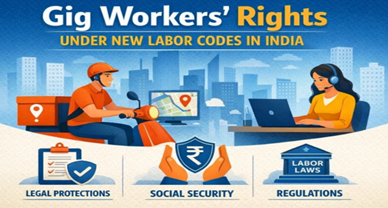
India’s vast informal sector, accounting for the majority of employment, poses the toughest enforcement challenge. While the codes expand social security coverage theoretically, millions of gigs, contract, and informal workers remain disconnected in practice. For example, delivery couriers in Delhi and Mumbai, grouped under the social security code’s new worker categories, report no visible changes in benefits or employer contributions six months after enforcement began. Without robust state-level schemes and inspector outreach, these workers risk becoming “included on paper but excluded in reality.”
This gap between formal intent and informal reality underscores that enforcement must be accompanied by proactive government programs, worker awareness drives, and accessible grievance mechanisms.
Striking a Balance: Enforcement as an Evolving Cooperation
Early enforcement of India’s labour codes reveals that success lies neither in rigid top-down policing nor lax permissiveness. It demands ongoing negotiation among the central government, states, enforcement agencies, employers, and workers. Examples from Maharashtra’s multi-stakeholder task forces to Kerala’s inspector training programs show that balancing facilitation with accountability is key to moving from compliance toward a culture of shared responsibility.
In conclusion, enforcing India’s labour codes is less about a single legal event and more about navigating complex administrative ecosystems, diverse local realities, and human factors. How these dynamics evolve in the coming years will shape not just compliance but the future of labour relations in India.
Author:– Amrita Pradhan, in case of any queries please contact/write back to us at support@ipandlegalfilings.com or IP & Legal Filing.
References
- Press Information Bureau (PIB), Government of India, Government Announces Implementation of Four Labour Codes to Align India’s Labour Ecosystem with Global Standards Effective November 21, 2025, November 21, 2025, https://labour.gov.in/sites/default/files/pib2192463.pdf.
- Press Information Bureau (PIB), Government of India, The Labour Codes Make Way for Better Wages, Safety, Social Security, and Industrial Relations, November 25, 2025, https://www.pib.gov.in/PressReleasePage.aspx?PRID=2194018.
- Press Information Bureau (PIB), Government of India, Labour Codes: Transforming India’s Textile Sector with Simplified Compliance and Enhanced Worker Welfare, November 29, 2025, https://www.pib.gov.in/FactsheetDetails.aspx?id=150508&NoteId=150508&ModuleId=16.
- Ministry of Labour and Employment, Government of India, Four Labour Codes Come into Force from November 21, 2025, Reforming 29 Existing Laws for Global Alignment, November 21, 2025, https://ddnews.gov.in/en/centre-implements-four-labour-codes-overhauling-29-existing-laws/.
- Press Information Bureau (PIB), Government of India, Labour Codes Benefit the Dock Workers with Compulsory Registration and Enhanced Protections, November 28, 2025, https://pib.gov.in/FactsheetDetails.aspx?id=150504&NoteId=150504&ModuleId=16®=3&lang=1.
- Press Information Bureau (PIB), Government of India, Code on Wages, 2019 Safeguards Workers, Induces Growth, and Promotes Fairness in India’s Labour Market, November 23, 2025, https://www.pib.gov.in/PressReleasePage.aspx?PRID=2193095.
- Prime Minister’s Office, Government of India, PM Welcomes the Implementation of the Four Labour Codes on November 21, 2025, November 21, 2025, https://www.pmindia.gov.in/en/news_updates/pm-welcomes-the-implementation-of-the-four-labour-codes/.
- Press Information Bureau (PIB), Government of India, Occupational Safety, Health and Working Conditions (OSH) Code, 2020 Enhances Transparency and Worker Welfare Effective November 21, 2025, November 22, 2025, https://www.pib.gov.in/PressReleasePage.aspx?PRID=2192802.
- DLA Piper, New Labour Codes Usher in a New Era of Compliance Across Indian States Effective November 21, 2025, November 27, 2025, https://knowledge.dlapiper.com/dlapiperknowledge/globalemploymentlatestdevelopments/2025/government-of-india-notifies-the-labour-codes-ushers-a-new-era-of-compliances.
- Reuters, India Enforces Four New Labour Codes in Major Overhaul of Worker Rules, Replacing 29 Old Laws Effective November 21, 2025, November 21, 2025, https://www.reuters.com/business/world-at-work/india-announces-implementation-new-codes-reform-labour-laws-2025-11-21/.
- The Times of India, What Do New Labour Codes Mean for Employees & Employers? From Minimum Wages to Payroll Changes Effective November 21, 2025, November 28, 2025, https://timesofindia.indiatimes.com/business/india-business/what-do-new-labour-codes-mean-for-employees-employers-from-minimum-wages-gratuity-benefits-to-appointment-letters-layoff-rules-top-things-to-know/articleshow/125545231.cms.
- EY India, New Labour Codes Implemented Across the Country Effective November 21, 2025: Key Impacts on Payroll and Compliance, November 21, 2025, https://www.ey.com/content/dam/ey-unified-site/ey-com/en-in/alerts-hub/2025/11/new-labour-codes-implemented-across-the-country-effective-21-november-2025.pdf.
- The Indian Express, GDP: New Labour Codes and Opportunity for India’s Weakest States Like Northeastern Regions, November 28, 2025, https://indianexpress.com/article/explained/explained-economics/labour-codes-india-weakest-states-10391054/.
- Littler Mendelson P.C., India’s Labor Law Overhaul: Snapshot of Key Changes Including Inspector-Cum-Facilitator Role Effective November 21, 2025, November 25, 2025, https://www.littler.com/news-analysis/asap/indias-labor-law-overhaul-snapshot-key-changes.